The Future of Education: Why One-Size-Fits-All Learning is Over

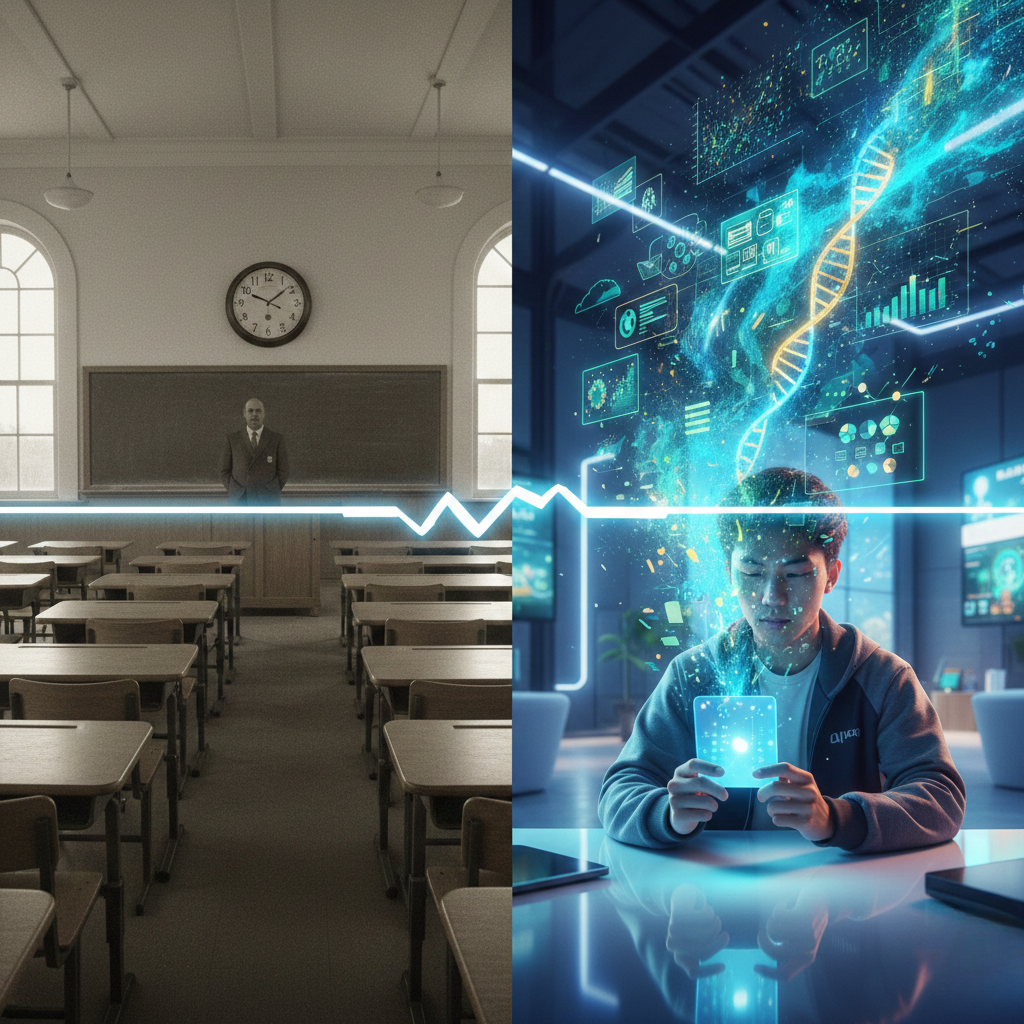
Think back to your days in a traditional classroom. Thirty desks in rows, a teacher at the front, and a single pace of learning determined by the clock on the wall. If you didn’t understand a concept in the first 10 minutes, you were lost. If you understood it in 2 minutes, you were bored.
For decades, this was the standard. But in a world that is becoming increasingly personalised—from our Netflix recommendations to our social media feeds—education is finally undergoing a much-needed revolution.
The future of education is not about memorizing textbooks to pass a test. It is about personalized, self-directed learning. And at the heart of this transformation lies a surprisingly simple, powerful tool: the flashcard.
The Shift from Passive to Active
Traditional education is often passive. Students listen, take notes, and hope the information sticks. This is like trying to get fit by watching someone else lift weights.
Modern education demands active engagement. You learn by doing, by struggling, and by retrieving information from your own brain. This is where flashcards shine. They turn the learning process into an active dialogue. You aren’t just reading; you are quizzing yourself. You are constantly testing your boundaries, which is the fastest way to build neural pathways.
Micro-Learning: Education for the Busy Lifestyle
We live in an era of constant distraction. The idea of sitting down for a 3-hour study session is becoming unrealistic for most working professionals and students.
This has given rise to Micro-Learning—the practice of breaking down information into small, manageable units. Flashcards are the ultimate micro-learning tool. A single flashcard represents a single nugget of knowledge.
- 5 minutes waiting for the bus? Review 10 cards.
- 15 minutes on a coffee break? Knock out a difficult deck.
This flexibility integrates education into the fabric of daily life, rather than confining it to a library desk. It allows anyone to become a lifelong learner, fitting education into the “dead time” of their day.
Democratizing Knowledge with Digital Tools
In the past, if you wanted to learn a complex subject like Anatomy or a new language, you needed an expensive textbook or a private tutor. Today, digital platforms have democratised access to high-quality education.
Digital flashcards allow users to curate their own curriculums. You aren’t limited to what a professor decides to teach. If you want to learn Python code, Japanese Kanji, or Art History, you can build a deck specifically for that goal.
Furthermore, the science of Spaced Repetition—algorithmically scheduling reviews—puts a personal tutor in your pocket. The app remembers what you know and what you struggle with, creating a custom curriculum that adapts to your unique brain.
The Key Skill: Learning How to Learn
Perhaps the most important shift in modern education is the realisation that we need to learn how to learn.
The workforce is changing faster than ever before. The skills we learn today might be obsolete in five years. Therefore, the most valuable skill a student can possess is the ability to acquire new skills quickly and efficiently.
By utilising tools like flashcards, learners develop metacognitive skills. They learn to identify their own weak points. They learn the value of consistency over cramming. They learn to manage their own cognitive load.
Conclusion: Take the Wheel
The era of the “factory model” classroom is fading. The future of education is bright, mobile, and intensely personal.
You no longer need to wait for a teacher to tell you what to learn. You have the power to curate your own knowledge, to study at your own pace, and to use science-backed tools to master any subject.
Whether you are a student trying to ace finals, a professional upskilling for a promotion, or a retiree learning a new language, the tools are in your hands.
Don’t just consume information. Master it on Verbalquiz!
Leave a Reply